Boiler Repair or Replacement? How to Decide for Your Home
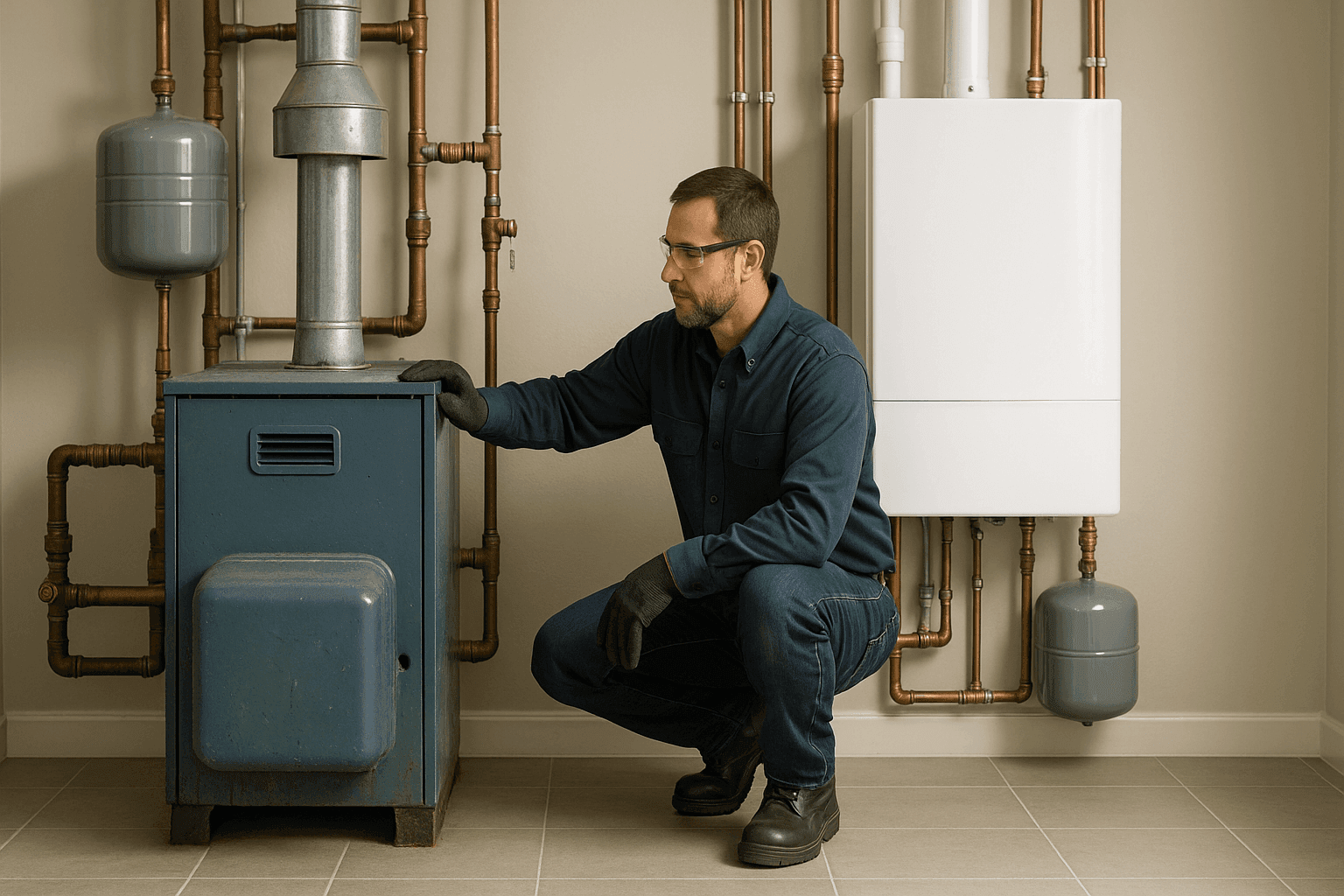
When your boiler falters, you feel it everywhere. Chilly rooms. Lukewarm showers. Maybe even the drip-drip of a leak. It’s easy to ignore small signs until they become big, urgent problems. But when the heat quits, you need answers fast.
At Dennis Foley Plumbing, we’ve helped countless families through the same crossroads: repair the old boiler, or invest in a new one? Our certified team specializes in emergency plumbing, leak repair near you, and—when you need it most—boiler repair and replacement you can rely on.
How Long Do Boilers Last? 🕰️
Think of your boiler like a dependable old car. With regular service, it’ll run for years—sometimes decades. But no machine lasts forever.
- Standard gas boilers: 10–15 years with annual maintenance.
- High-efficiency condensing boilers: 12–20 years, when cleaned and checked regularly.
- Oil-fired boilers: 10–20 years, but they demand steady attention.
- Electric boilers: 15–20 years, though heating elements may wear out sooner.
The secret to longevity? Maintenance. Annual inspections, cleaning, and flushing prevent buildup, corrosion, and dangerous leaks. Neglect shortens a boiler’s life faster than a Midwest winter.
Signs You Need Boiler Repair
Not every rattle means doom. But some boiler problems are a warning bell you shouldn’t ignore:
- Unusual noises: Banging, gurgling, or whistling often signal trapped air or mineral deposits.
- Visible leaks: Any water under or around your boiler is a red flag. Even a drip can lead to costly water damage.
- Loss of heat or hot water: If your home never warms up or the shower’s always cold, something’s amiss.
- Rising energy bills: A tired boiler works harder, burning more fuel but delivering less comfort.
- Frequent cycling: If your boiler turns on and off rapidly, it’s struggling—and so is your wallet.
If you spot these signs, don’t wait. A small repair today can save you from a freezing emergency tomorrow.
When Replacement Makes Sense
Sometimes, patching up an old boiler is like slapping a bandage on a cracked dam. Here’s when it’s smarter to upgrade:
- Age: If your boiler is 15+ years old, replacement may be more cost-effective.
- Constant repairs: More than one major fix every heating season? Time to consider a change.
- Outdated technology: Modern boilers are up to 30% more efficient, meeting today’s standards (per the EPA and DOE).
- Safety concerns: Old units risk carbon monoxide leaks, especially if you have a gas or oil boiler.
- Incompatible with new parts: Some older models use parts that are no longer available.
Cost & Comfort Comparison 💡
Upgrading isn’t just about avoiding breakdowns. It’s about comfort, safety, and savings:
- Lower utility bills: New high-efficiency boilers cut fuel costs, especially with Energy Star models.
- Rebates & incentives: Many municipalities and energy companies offer rebates for efficient upgrades—check with your local utility.
- Warranty peace of mind: Modern boilers come with robust warranties, reducing surprise expenses.
- Consistent heating: No more cold spots or unreliable hot water.
Boiler replacement is an investment, but it pays off long-term in both energy savings and peace of mind.
Quick Safety Checklist 🛑
Your family’s safety comes first. Before you do anything, run through this list:
- Smell gas? Leave your home immediately and call emergency services.
- Check for water pooling around the boiler—shut off the water and power if safe to do so.
- Look for error codes on digital displays.
- Make sure all vents and exhausts are clear of snow, leaves, or debris.
- Never try to repair a gas or oil boiler yourself. Gas safety checks should always be left to licensed professionals.
DIY vs. Call a Pro
Some things you can handle. Others require a certified hand.
DIY tasks:
- Bleeding radiators to remove trapped air.
- Checking your thermostat settings.
- Resetting your boiler (if the manual instructs).
Call Dennis Foley Plumbing for:
- Any leak repair near you, especially with gas or oil.
- Repeated loss of heat or hot water.
- Strange noises that persist after simple fixes.
- Boiler won’t turn on at all.
- Visible corrosion or rust on pipes or the tank.
Gas appliances are subject to local building codes and national safety standards (see National Fire Protection Association [NFPA] 54 and your state’s plumbing code). Don’t take chances.
What Pros Do On Arrival
When our team arrives, you’ll see a clear, methodical process:
- Inspect for obvious leaks or corrosion.
- Check burner operation, pilot light, and thermostat connections.
- Test water pressure and temperature controls.
- Examine venting and exhaust systems for blockages.
- Use advanced leak detection and combustion analyzers.
- Advise you clearly: repair or replace. No scare tactics.
We’re fully licensed and certified to work on all major boiler brands and fuel types.
Prevention & Maintenance
Want your boiler to last? Treat it like a garden—regular care yields healthy results:
- Schedule annual maintenance before heating season.
- Flush the boiler to remove scale and sediment.
- Replace worn gaskets and seals.
- Test safety valves and pressure relief devices.
- Keep the area around your boiler clean and unobstructed.
- Install carbon monoxide detectors near every gas appliance.
Simple steps now prevent expensive emergencies later.
Costs & Time Factors
No one likes surprise bills. Here’s what to expect:
- Repairs: Minor fixes (thermostats, valves) may take an hour or two and run a few hundred dollars. Major repairs (heat exchangers, pumps) take longer and cost more, especially if parts are scarce.
- Replacement: A straightforward boiler swap can be done in one day, but complex installations (changing fuel type, adding controls) may stretch over several days.
- Permitting: Many towns require permits for boiler work—allow extra time for inspections.
Remember, delaying repairs can increase costs. Address leaks and heating problems quickly to avoid water damage or mold.
When It’s an Emergency 🚨
If your boiler quits in the dead of winter, it’s more than uncomfortable—it’s urgent. Call for emergency plumbing if:
- You have no heat in freezing temperatures.
- There’s a visible gas leak or strong odor.
- Water is pouring from your boiler or pipes.
- You suspect a carbon monoxide leak (headache, dizziness, nausea—leave the house immediately).
Dennis Foley Plumbing is here 24/7. We handle emergency plumbing and leak repair near you, day or night.
FAQ
How do I know if my boiler is dangerous?
Any signs of gas smell, constant leaks, or carbon monoxide detector alarms mean your boiler needs immediate professional attention.
Can I keep using my boiler if it’s noisy?
Odd noises mean something isn’t right. Continued use can cause more damage—call a professional for assessment.
What’s the typical lifespan of a modern boiler?
With regular maintenance, expect 12–20 years, depending on the model and fuel type.
Do I need to replace my radiators if I get a new boiler?
Usually not, but older radiators may benefit from a flush or replacement for best efficiency.
Local & Seasonal Considerations
Different regions rely on different fuel types—natural gas, oil, propane, or electric. In older New England homes, oil-fired boilers are common, while suburban homes may use gas or electric. Severe winters put extra stress on heating systems, so fall is the right time for a checkup.
If you’re in an area with hard water, mineral buildup can shorten your boiler’s lifespan. Consider water filtration systems to protect your investment.
Ready for Reliable Heat?
Don’t let boiler troubles leave your family in the cold. For honest answers and skilled emergency plumbing, call the licensed boiler specialists at Dennis Foley Plumbing.
Call Dennis Foley Plumbing now — or reach us anytime at 888-997-4573 .