The Ultimate Guide to Unclogging Drains: DIY and Professional Solutions
Is water swirling slowly in your sink? Does your shower start to feel more like a pond than a place to get clean? That gurgling sound from your pipes isn’t just annoying—it’s a call for attention. At Dennis Foley Plumbing, we know a clogged drain can turn a regular day into an urgent situation in no time.
You want answers fast. Let’s cut through the confusion. Here’s your all-in-one guide to unclogging drains—what you can handle yourself, when you should call for emergency plumbing, and how to keep clogs from coming back.
Common Causes of Drain Clogs 🛁
Clogs don’t appear out of nowhere. Most form over time, like a snowball gathering mass as it rolls downhill. Here are the most common culprits:
- Hair: The silent saboteur in bathroom sinks and showers.
- Grease and Oil: Pouring oil down the kitchen sink is like sending bacon grease down a straw—eventually, it hardens and blocks the way.
- Food Scraps: Even with a garbage disposal, fibrous foods (think celery or potato peels) can clump together.
- Soap Scum: Hard water plus soap creates a sticky film that grabs everything else.
- Foreign Objects: Small toys, jewelry, sanitary products, and wipes—these can quickly become immovable obstacles.
- Tree Roots: Outside, roots searching for water can sneak into sewer pipes, especially after heavy rain or during drought.
The season matters too. In spring, rain can overwhelm sewer lines. In autumn, falling leaves find their way into outdoor drains. Each clog has a story—and knowing the cause makes it easier to fix.
DIY Methods: Simple Ways to Unclog Drains
Before you reach for the phone, there are a few safe tricks you can try. Think of these as the first line of defense.
The Plunger
A plunger is like the fire extinguisher of your plumbing toolkit. For sinks and toilets, a few solid pumps can break up minor clogs.
- Sink: Block any overflow holes with a wet rag. Fill the sink just enough to cover the plunger cup. Plunge with quick, strong motions.
- Toilet: Use a flange plunger for a better seal. Plunge steadily to avoid splashing.
Baking Soda & Vinegar
This classic combo creates a fizzy reaction that can help loosen gunk.
- Pour half a cup of baking soda down the drain.
- Follow with a cup of white vinegar.
- Wait 15–20 minutes, then flush with hot (not boiling) water.
It’s a gentle method—good for slow drains, not full blockages.
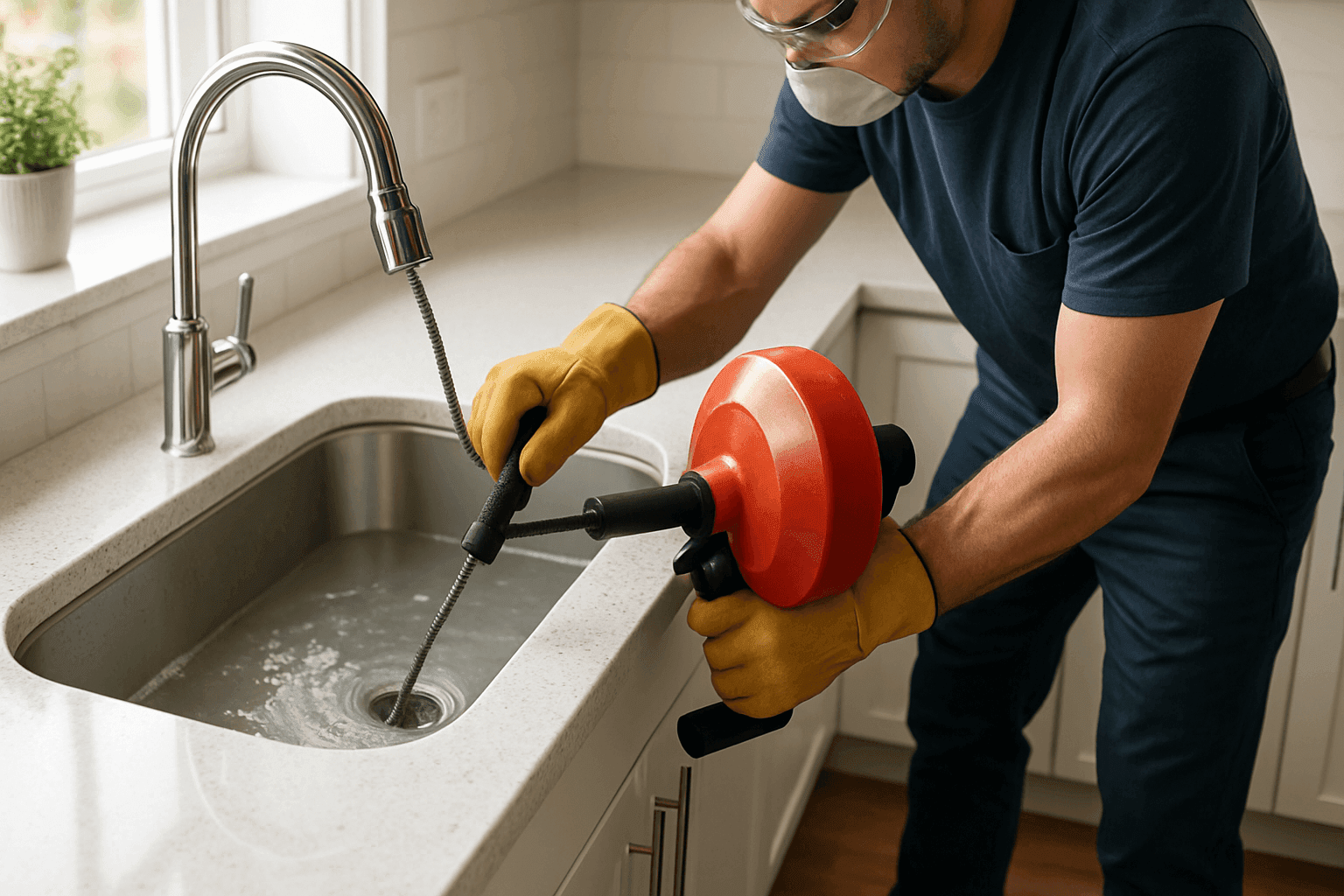
Hand Auger (Drain Snake)
Think of a hand auger as a plumber’s fishing pole. It reaches down the pipe, grabs the clog, and reels it in.
- Feed the snake slowly until you feel resistance.
- Twist the handle to break up or hook the clog.
- Retract carefully, cleaning as you go.
Use gloves and a bucket for any mess. Hand augers work well on hair or food clogs close to the drain.
Tip: After using any method, run hot water to clear away loose debris. If the water doesn’t flow freely, don’t force it—there’s likely a deeper problem.
When to Avoid DIY: The Limits of Home Remedies ⚠️
Sometimes, trying to fix a clog yourself can make things worse. Here’s when to step back:
- Chemical Drain Cleaners: These products promise miracles but often deliver pipe damage and toxic fumes. The EPA warns that harsh chemicals can eat through older pipes or create dangerous reactions.
- Deep or Repeated Clogs: If the same drain keeps clogging, there may be a bigger issue: tree roots, collapsed pipes, or a hidden foreign object.
- Gurgling in Multiple Fixtures: If sinks, tubs, and toilets all back up at once, your main sewer line could be blocked.
- Standing Water That Won’t Budge: If water isn’t draining at all, the obstruction is likely serious.
Trying to force a snake or pour in more chemicals can crack pipes, making repairs much more expensive. In these cases, it’s time for professional help.
Professional Drain Cleaning Solutions
When DIY tricks don’t cut it, Dennis Foley Plumbing steps in with tools and techniques you won’t find at the hardware store. Here’s what happens when you call for emergency plumbing or drain cleaning near you.
Mechanical Snakes (Augers)
These heavy-duty versions of hand augers can clear out tough blockages deep in your pipes. Our machines can reach further and spin faster, breaking up stubborn clogs without damaging your plumbing.
Hydro Jetting
Imagine a power washer for your pipes. Hydro jetting uses high-pressure water (up to 4000 PSI) to blast away grease, minerals, roots, and buildup. It’s effective, thorough, and doesn’t leave chemical residue.
Safety Note: Only trained professionals should handle hydro jetting. High-pressure water can injure or damage pipes if used incorrectly.
Camera Inspections
We use waterproof cameras to look inside your pipes. This helps us pinpoint the exact cause of the clog—no guessing, no needless digging. It’s especially helpful for finding tree roots or collapsed pipes.
Warranty-Backed Service
Dennis Foley Plumbing stands by our work. Our licensed plumbers follow local plumbing codes and safety guidelines (refer to the International Plumbing Code and your local authority). When we clear a drain, you know it’s done right.
How to Prevent Future Clogs 🛡️
The best clog is the one that never happens. Here’s how homeowners can keep drains flowing all year:
- Install Drain Screens: Catch hair and food before they go down.
- Dispose of Grease Properly: Let it cool and throw it in the trash, not the sink.
- Flush Only Toilet Paper: Wipes, feminine hygiene products, and paper towels belong in the bin.
- Regular Hot Water Flush: Once a week, pour hot water down the drains to move along small debris.
- Trim Tree Roots: If you have large trees near your sewer lines, have the roots checked and trimmed as needed.
- Annual Inspections: Schedule preventative maintenance visits with Dennis Foley Plumbing to spot small issues before they become emergencies.
Safety First: What NOT to Do
- Never mix chemical drain cleaners. It’s like mixing bleach and ammonia—dangerous fumes can result.
- Don’t use boiling water in toilets or on PVC pipes; it can warp or crack them.
- Avoid sticking wire hangers or sharp objects down drains; they scratch pipes and make things worse.
- If you smell gas or sewage, leave the area and call for emergency plumbing immediately.
Local and Seasonal Drain Clog Tips 🌳
Every location has its quirks. In spring, heavy rain can back up storm drains and push debris into sewer lines. After a dry summer, tree roots grow aggressively, searching for moisture and sometimes breaking into pipes.
- After Storms: Check outdoor drains for leaves and debris. Clear them promptly to avoid backups.
- Fall and Winter: Schedule a sewer line inspection before the ground freezes. Frozen pipes can burst and cause major leaks.
- Older Homes: If your house is more than 40 years old, consider a sewer line inspection or repiping to prevent sudden emergencies.
When to Call for Emergency Plumbing
Not every clog is an emergency, but some require immediate action:
- Water flooding your basement or bathroom
- Sewage backing up into your home
- No drainage from multiple fixtures
- Foul odors from drains or pipes
- You’ve tried DIY methods, and nothing works
If any of these happen, call Dennis Foley Plumbing for emergency plumbing. Fast action can prevent water damage and costly repairs.
Frequently Asked Questions
Why does my drain keep clogging, even after I clear it?
Persistent clogs could mean there’s a deeper blockage, collapsed pipe, or tree root intrusion. These issues are hidden from sight and need a professional camera inspection.
Are chemical drain cleaners safe for my pipes?
Most chemical drain cleaners are harsh and can corrode metal or soften plastic pipes. The Environmental Protection Agency (EPA) and plumbing codes recommend using mechanical methods or calling a professional instead.
How do I know if I have a sewer line problem?
Look for slow drains in several rooms, frequent backups, or gurgling noises. You might also notice wet patches in the yard or foul odors. These are signs to call a plumber for a sewer line inspection.
Can I prevent drain clogs without chemicals?
Yes! Use screens, avoid pouring grease down drains, and flush pipes regularly with hot water. Schedule preventative maintenance to catch problems early.
The Bottom Line
Clogs happen, but you don’t have to face them alone. With the right knowledge, you can tackle small blockages—and know when it’s time to bring in the pros. Dennis Foley Plumbing is here for emergency plumbing, leak repair near you, and everything else your pipes need, day or night.
Call Dennis Foley Plumbing now — or reach us anytime at 888-997-4573 .